
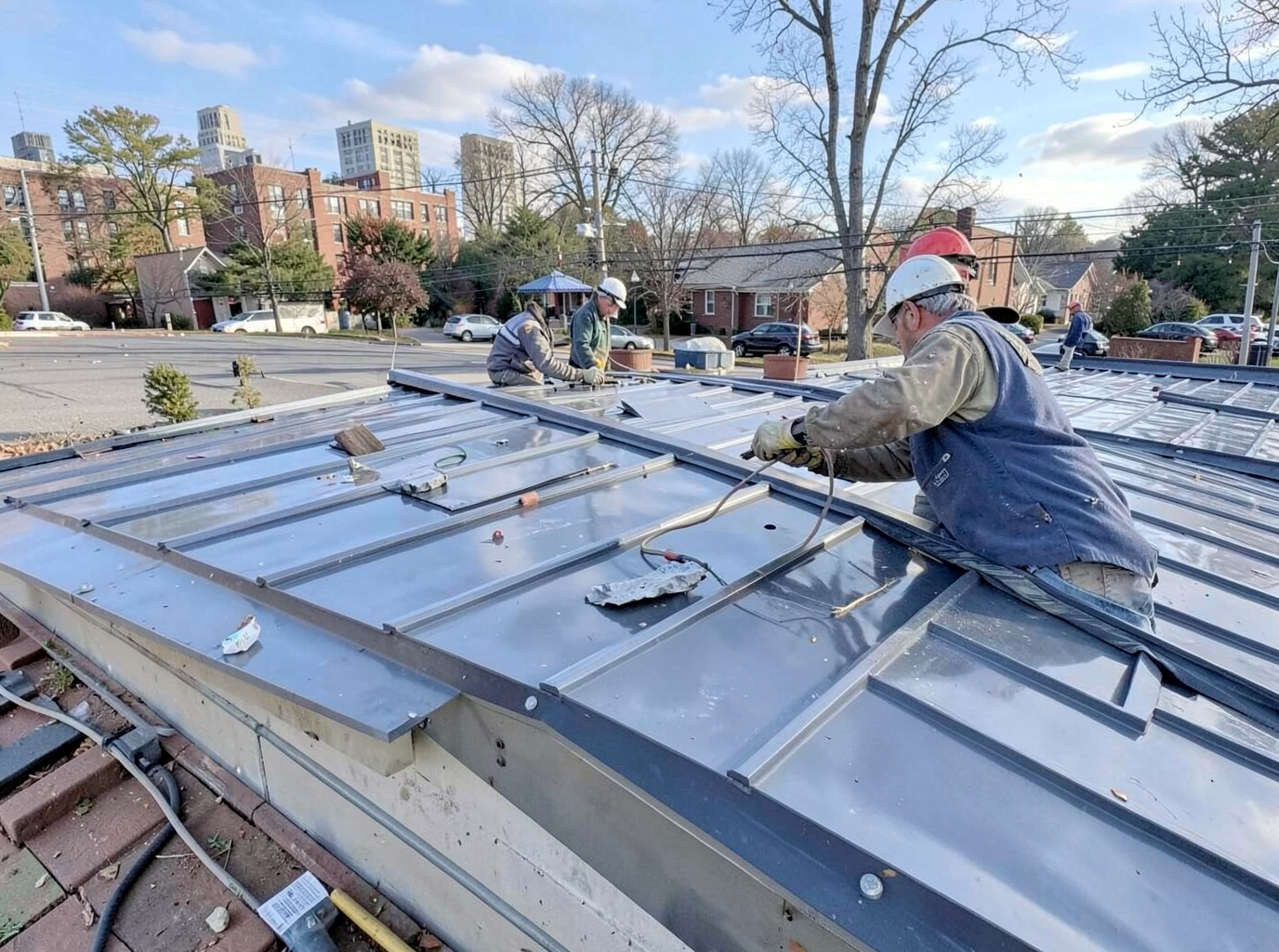
Metal roofing performs well in Johnson City’s humid subtropical climate where summers bring high heat and winters deliver occasional ice and snow. Standing seam panels handle thermal expansion better than asphalt shingles when temperatures swing across the four distinct seasons. Homes in older sections of Downtown Johnson City and South Johnson City often have steeper pitches or mixed roof planes that require careful flashing at valleys and around chimneys common on pre-1970 construction.
Wind-driven rain from summer storms and freeze-thaw cycles in Washington County can push water under traditional roofing edges. Proper underlayment and sealed seams reduce leak risk on properties near the Tweetsie Trail corridor where tree cover increases moisture retention. Crews working near East Tennessee State University frequently coordinate with campus-adjacent homes that have limited staging space and stricter noise windows.
Installation crews serving Boones Creek and North Johnson City routinely check for hidden deck rot caused by long-term gutter overflow before laying new metal panels. Galvalume or painted steel systems are chosen based on exposure to road salt from nearby routes connecting to Kingsport and Bristol. Proper ridge ventilation is added on many ranch-style homes common in the area to manage attic heat buildup during humid summers.
Technician insight
In Johnson City the thing that catches most people out with Metal Roofing Installation is underestimating how quickly summer humidity and winter ice dams push water under poorly sealed ridge caps on the older ranch homes common around South Johnson City.
Boones Creek Metal Overlay
Homeowner in Boones Creek had recurring leaks at valleys after heavy spring rains. Inspection showed intact deck but failing asphalt shingles. We installed standing seam panels over new underlayment without full tear-off, added sealed ridge vent, and finished before the next forecast rain.
Metal Roofing Installation Services We Offer
✓Standing Seam Metal Roof Installation
Hidden-fastener panels installed on homes in South Johnson City and Boones Creek for superior leak resistance during heavy seasonal rains.
✓Metal Roof Over Shingles
Direct overlay on structurally sound decks common in North Johnson City neighborhoods where tear-off would disturb older plaster ceilings.
✓Screw-Down Metal Panel Installation
Exposed-fastener systems used on outbuildings and garages around Freedom Hall Civic Center where budget and simple slopes are priorities.
✓Metal Roofing for Additions and Porches
Matching panels installed on room additions and covered porches typical of Washington County homes near the Tweetsie Trail.
✓Ridge Vent Integration with Metal Roofs
Continuous ridge ventilation added during installation to reduce attic moisture in humid summers across Downtown Johnson City.
Metal Roofing Installation Cost in Johnson City, TN
| Service | Typical Range | What Affects It |
|---|---|---|
| Standing Seam Installation | $9–$16 per sq ft | Higher end for steep pitches or multiple valleys near Downtown Johnson City |
| Screw-Down Panel Installation | $6–$10 per sq ft | Lower cost option for simple gable roofs in Boones Creek |
| Tear-Off Of Existing Shingles | $1.50–$3 per sq ft | Added when multiple layers exist on older Washington County homes |
Ranges are typical for Johnson City, TN and confirmed with an exact written quote before any work starts.
How it works
- 1
Site Assessment
Measure roof planes, check deck condition, and note existing flashing details on properties in Johnson City neighborhoods.
- 2
Material Selection
Recommend panel profile, gauge, and color suited to the home’s pitch and exposure to four-season weather.
- 3
Deck Preparation
Repair or replace damaged sheathing and install synthetic underlayment before panel layout begins.
- 4
Panel Installation
Fasten panels with proper overlap and sealed penetrations around chimneys and vents common in local housing.
- 5
Final Inspection
Check all seams, trim, and ventilation then clean debris before homeowner walkthrough.
Pricing
Metal roofing costs vary with panel type, roof complexity, and whether tear-off is required.